- -50%
keyboard_arrow_left
keyboard_arrow_right

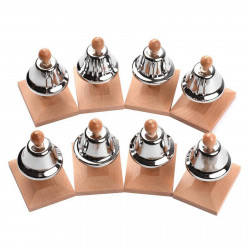
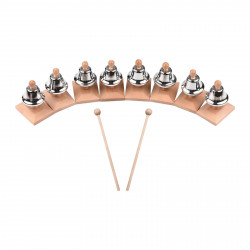
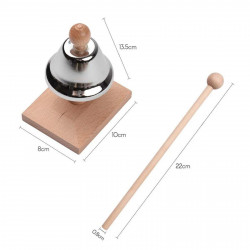
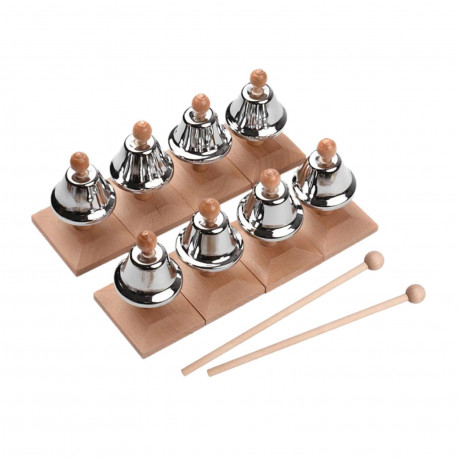
THE BELLS
MATERIAL DESCRIPTION:
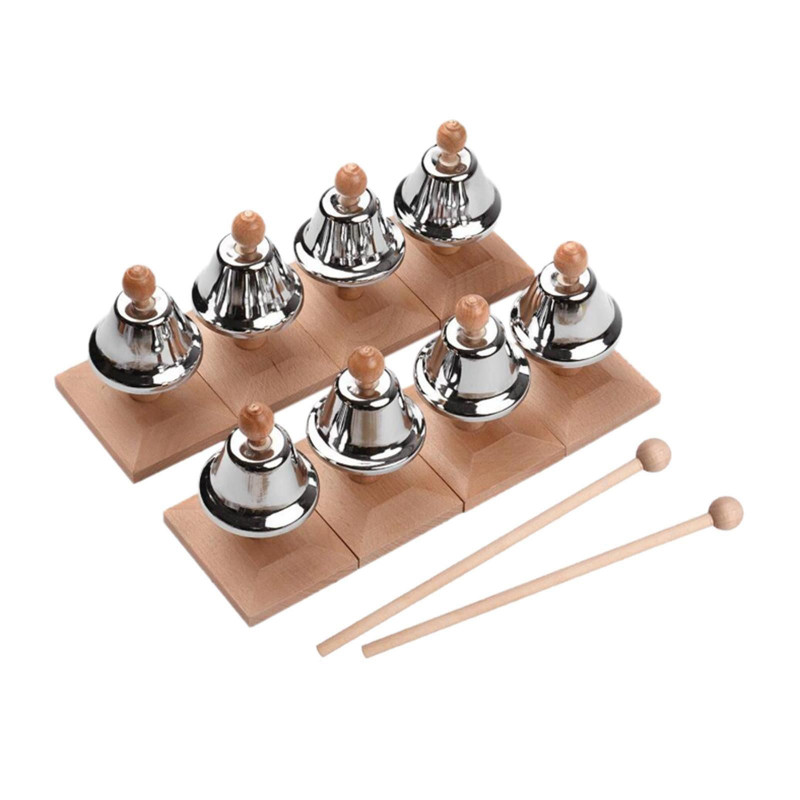
- eight bells with a base in natural wood (beech).
- two mallets
Indirect aims development of fine motor skills improvement of auditory memory preparation for future musical studies.
AGE OF FIRST PRESENTATION: as soon as the child has a certain coordination
with their hands.
AIMS: DIRECT: training and refinement of hearing
INDIRECT: preparation for music
PRESENTATION:
First exercise: how to carry the bell: with three fingers on the stem of the
bell and the other hand under the base.
Second exercise: how to hold the mallet: hold the handle with three fingers, the
ball pointing downward.
Third exercise: how to make the bell ring: strike just at the edge of the
bell with a movement of the wrist. Introduce the damper, hold it with three fingers
at the end and place the felt pad against the bell.
First session:
Producing the sound: have the child listen to each bell individually.
- once they have listened to all of them, remove three bells and mix them up in front of the child
- ring one of the three white-wood bells still in place, then one of the three removed ones, and
ask the child whether it is the same; if not, try with another
- once the matching bell is found, put it back in place
— ask the child to do the two remaining bells: always begin by ringing
the control bell, the bell with the white base.
Second session:
- when the child makes the association without difficulty, take a known bell accompanied
by two new ones
- continue this way until the child has seen all the bells
- when they have seen them all, take all the bells, remove them from their place and
mix them up
- begin by ringing the white-wood bell, then the brown-wood bell
Once the matching bell has been found, play the formed pair then move on to the next bell; when the child has identified all the bells move on to the next step
Third session:
- take the "brown" bells out of their place and mix them up
- ring the first note of the scale
- ring the "brown" bells until the same sound is found
- once found, put the "brown" bell in place and ring the pair
— play the second note of the scale (the second control bell) and search among all the removed bells for the one that matches it
- once found, put the bell back in place and play the pair
— replay the first note then the second and ring the third bell
- continue this way, each time playing the sequence from the beginning
Fourth session: gradation
— play the scale, dampen the sounds with the damper
- remove the "brown" bells from their place
- ring all the bells and ask the child to stop us when they hear the first note
— continue this way until the scale is rebuilt
LANGUAGE:
Introducing the vocabulary low/high
— take two bells, one at each end, the C and the B
- sing the C while playing it, then the B with the child
- tell the child that the sound they just sang while you showed them the C is a low sound and that the sound they sang when you ring the B is a high sound
-mix the two bells
- ring them both and ask the child which is the low sound
- play again and ask the child which is the high sound
- ask them to find the low sound then the high sound
Introducing the superlative "lower"/"higher"
- take two bells with closer sounds
- ask the child which one has the lower or higher sound.
GAMES:
Game 1: Pairing at a distance
Put all the bells (brown base) on a tray and take them some distance away. Choose one bell among all those left behind, set it apart to distinguish it.
Ask the child to play it and then go find the same sound.
Game 2: Play a bell and ask the child to go find a sound that is slightly lower or slightly higher.
Game 3: Form several groups of children, ask each to close their eyes and assign each group a sound. Play the sound and ask each group to recognize whether it is theirs.
THE NAMES OF THE NOTES
- ask the child to play the series
- play the C and ask the child whether the note is high or low
- tell them that each bell has a very precise name: "You see, you too have a name, your friends have their names"
- take three bells, play them and sing them with the child
- mix them up and sing them again
- choose the C bell, tell the child its name and sing it with the child
- take the small wooden disc on which C is written and place it in front of the bell
- play the G bell, tell the child its name and place the G label in front of the bell
- play the last bell, say its name, E, and place the E disc in front
- change the bells' places (C-E-G) and sing them with the child
- mix up the note-name tokens and choose one, for example C
- play the three bells and ask the child which one is the C
- have the child choose another note and look for the bell that matches it
- play each bell and ask the child "what is this?" for the rest of the notes, keep a well-known note and introduce two new ones
SIMPLE INTRODUCTION TO BASIC MUSICAL TERMS (interval, tone, half-tone, major scale)
..........




THE BELLS
MATERIAL DESCRIPTION:
- eight bells with a base in natural wood (beech).
- two mallets
Indirect aims development of fine motor skills improvement of auditory memory preparation for future musical studies.