
Science
Montessori Science: Cultivating the Scientific Mind Through Sensory Exploration
At Montessori Store, we believe that every child is born a scientist. Our collection of Montessori science materials, faithful to the rigorous research of Maria Montessori (1870-1952), turns the discovery of the world into a tangible adventure where observing, handling and classifying become the foundations of logical, wonder-filled thinking.
A proven scientific approach, from the hand to the mind
Maria Montessori, Italy's first female physician, devoted her life to observing how children build their understanding of the world. She designed precise science materials in which each element isolates a single concept, allowing the child to move from the concrete to the abstract, from experience to natural law.
The 4 pillars of Montessori scientific learning
1. Active observation
- Handling to see, compare and measure
- Isolating variables one at a time
- Developing a keen eye for the real world
2. Classification and order
- Sorting, sequencing and organising living things and matter
- Understanding natural categories
- Building precise nomenclatures
3. Independent experimentation
- Testing, verifying and drawing one's own conclusions
- Learning from mistakes as a source of knowledge
- Developing a personal methodology
4. The connection with living things
- Respect and understanding of biodiversity
- Awareness of cycles and ecosystems
- Responsibility towards one's environment
Our selection of Montessori science materials
Biology and anatomy
- Child-friendly articulated skeletons: human and animal, to understand the structure of living beings
- Organ puzzles: heart, brain, digestive system in removable pieces
- Life cycles: butterflies, frogs, plants - as figurines or sequence cards
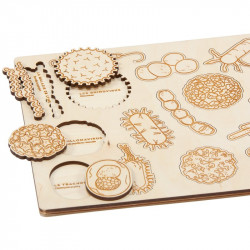
- Botany boxes: leaves, flowers and seeds to classify and identify
Astronomy and physical geography
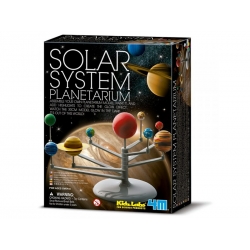
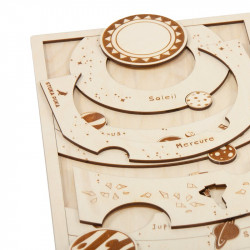
- Solar system models: proportioned, movable planets
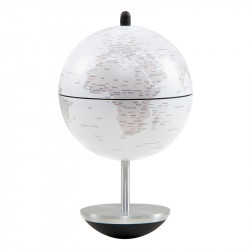
- Globes: smooth/textured, continents/political maps
- Geography puzzles: continents, countries, geological formations
- Nomenclature cards: landforms, climates, natural phenomena
Elementary physics and chemistry
- Precision scales and weights: an introduction to mass and balance
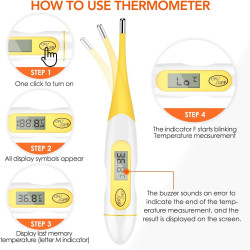
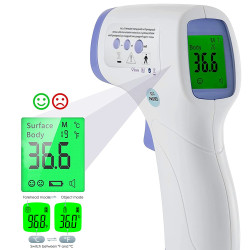
- Thermometers and weather instruments: a simplified weather station
- Magnetism kit: magnets of varied shapes and strengths
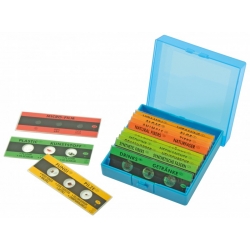
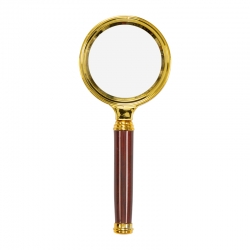
- Child-friendly magnifiers and microscopes: exploring the micro-world
Health sciences
- Learning teeth models: dentition models for oral hygiene
- Human body models: organs in felt or wood
- Nutrition games: food groups, balanced plates
The benefits of the Montessori scientific approach
Natural curiosity nurtured: wonder as the engine of learning
Structured logical thinking: from observation to deduction
Intellectual independence: searching, verifying and concluding on one's own
Precise scientific vocabulary: naming in order to understand and share
Early ecological awareness: understanding in order to protect
Why does our material make the difference?
Educational authenticity:
- Compliant with Montessori specifications and progressions
- Designed for self-correction and free experimentation
- A clean aesthetic that focuses attention on the concept
Quality and safety:
- Fine, durable materials (solid wood, metal, safety glass)
- Non-toxic finishes that withstand repeated handling
- Sizes suited to small hands, with no dangerous small parts
An integrated approach:
- A clear link between the different scientific fields
- Progression from the simple to the complex, from the concrete to the abstract
- Activities that indirectly prepare for mathematics and language
Exploration guide by age
3-6 years: Observation and classification of the concrete (leaves, shells, animal figurines)
6-9 years: Experimentation and connection-making (life cycles, simple physical phenomena)
9-12 years: Abstraction and modelling (complex systems, food chains, detailed maps)
Expert tip: "Let the child lead the exploration. Your role is to prepare the environment, present the material precisely, and then observe. It is through repeated, free handling that genuine scientific understanding is born."
Give your child the tools to read the great book of nature.
Explore our unique collection of Montessori science materials and support the blossoming of a curious, rigorous mind that respects the world around it.
Science is not learned, it is lived. Maria Montessori