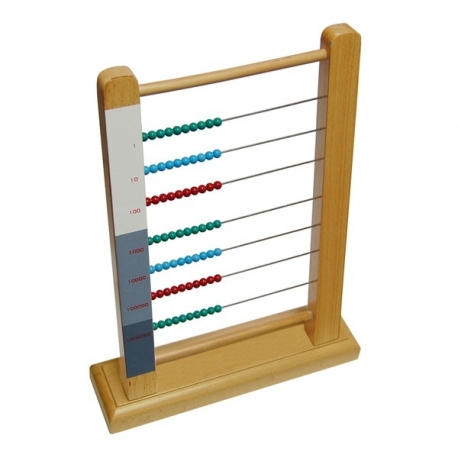
Large Wooden Montessori Abacus: A sensory and mathematical learning tool
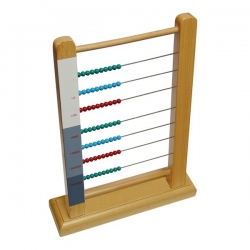
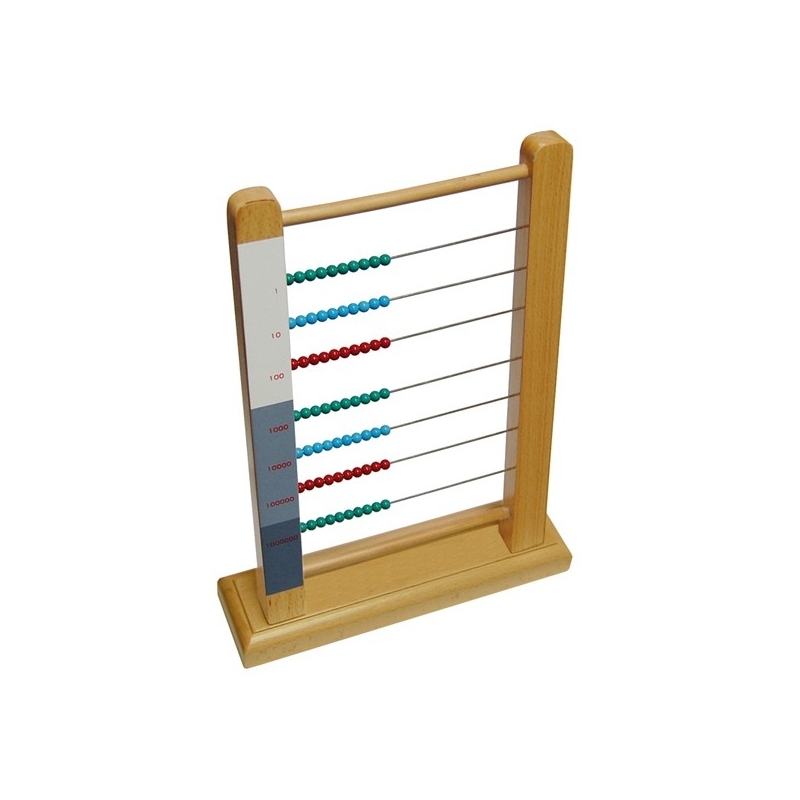
This beautiful wooden abacus, inspired by the Montessori approach, is designed to introduce mathematical concepts in a concrete, sensory way. Made up of rows of colored beads, it offers a tactile learning experience that fosters an understanding of numbers, operations and the decimal system.
the large abacus is made in the same way as the small abacus, except that the first class: 1-10-100 is written on a white background, the second class: 1000, 10,000, 100,000 on a grey background, and the third class: 1,000,000 on a black background.
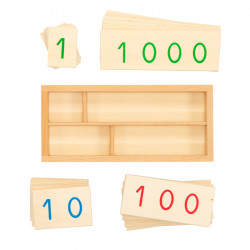
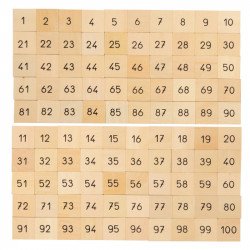
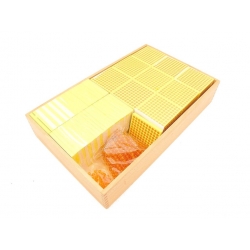
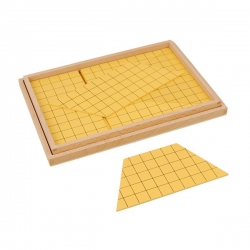
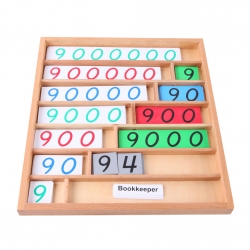
the hierarchy material
1 stick to push the beads, as we wish.
Example of a practical exercise:
Address the child with an invitation. Fetch the large abacus along with the hierarchy material and sit at a table with the child.
Take the small cube and ask what it is; the child has already seen it, it's 1. Push a bead on the units rod and ask: "what is it? it's 1 too". Show the blue ten and ask what it is. It's 10. Push a bead to the right on the tens rod and ask what it is. It's 10 too. Continue this way up to the large cube of 1,000,000.
Then put the beads back in place and ask the child to compose, for example, 10, and the child moves a bead belonging to the tens rod; to compose 100,000, and the child moves a bead belonging to the 100,000 rod, and so on for each class of the first, second and third order.
Then show the child the large abacus worksheet. Show them where the units, tens, hundreds, thousands, ten-thousands, hundred-thousands and the million are.
Push a bead corresponding to the units rod and tell the child to write the number.
A units bead has been moved; write 1 on the sheet on the green units line. Move a second bead, write 2. Move a third bead, write 3. Once at ten, write the number 10, move a bead belonging to the tens rod and put the ten units beads back in place. Continue with 20, 30, 40, 50, 60 etc. up to the million.
Invite the child to write a number and compose it on the abacus, for example 21,329, 573,624, 7,021,415.
Benefits for the child:
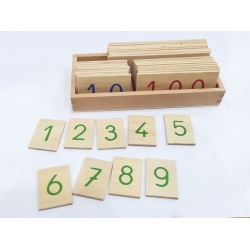
Development of logical and mathematical thinking
Improved hand-eye coordination
Strengthened concentration and attention
Building solid foundations in mathematics
Self-confidence through concrete, rewarding learning
Large Wooden Montessori Abacus: A sensory and mathematical learning tool
This beautiful wooden abacus, inspired by the Montessori approach, is designed to introduce mathematical concepts in a concrete, sensory way. Made up of rows of colored beads, it offers a tactile learning experience that fosters an understanding of numbers, operations and the decimal system.