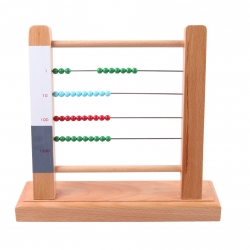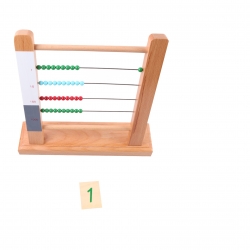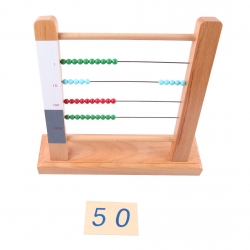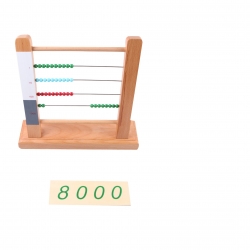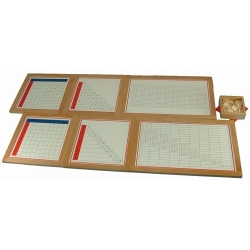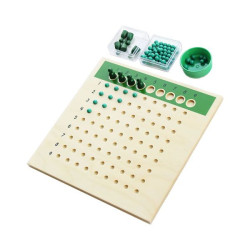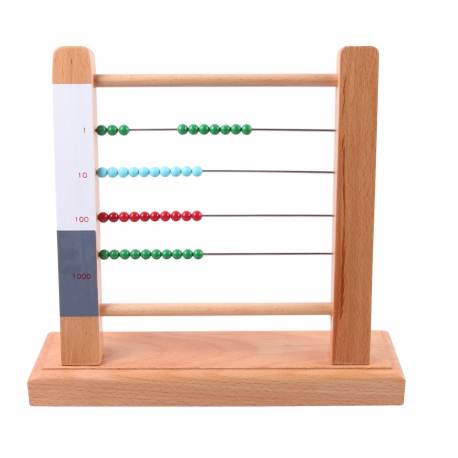
A frame holding four metal rods representing the units on the top rod, then the tens, hundreds and thousands. On each rod there are ten beads:
10 green beads for the units
10 blue beads for the tens
10 red beads for the hundreds
10 green beads for the thousands
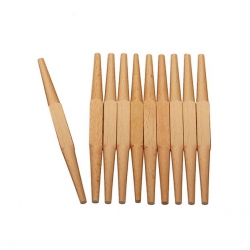
Each rod corresponds to a number written on the left edge of the frame, on a white background for the units, tens and hundreds, and on a grey background for the thousands. With this material come a small stick to move the beads as we wish and abacus worksheets.
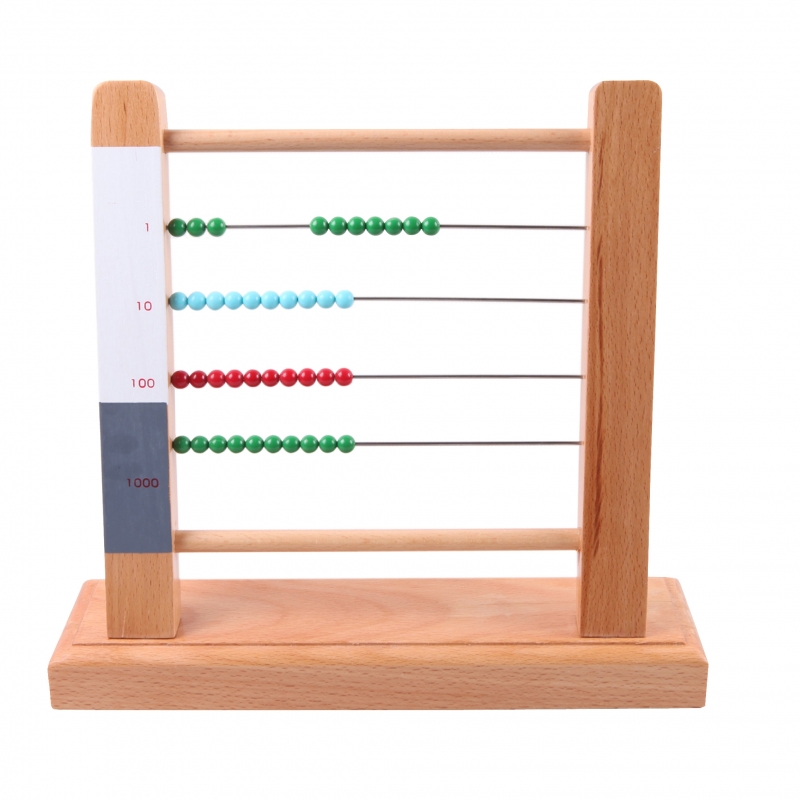
Example of a practical exercise:
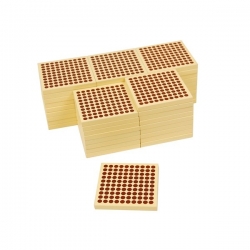
Sit at a table with the child. Fetch the abacus and the tray with the beads representing the units, the bars representing the tens, the hundred squares and the thousand cubes.
Show the child a golden bead and ask what it is: a unit, yes. Push a bead of the abacus to the right while saying: "one unit".
Take a second bead from the dish, place it on the table and say: "two units". Push the bead on the abacus to the right while saying: "two units".
Invite the child to continue up to the tenth unit. Once at ten, ask what ten units make: "one ten, yes". Push the first bead of the abacus rod representing the tens, return the unit beads to the left and take a ten-bar. Ask the child to count how many tens there are, each time pushing a bead of the abacus to the right and taking a ten-bar that is placed on the table.
Once at ten tens, ask the child what ten tens make: one hundred. Push the first bead of the rod representing the hundreds to the right, return the ten tens to the left and take a hundred (in golden beads). Ask the child to count how many hundreds there are. Each time the child pushes a bead to the right and takes a hundred square.
Once at ten, ask the child what ten hundreds make: one thousand. Push the first bead of the rod representing the thousands to the right, return the ten hundreds (the ten abacus beads) to the left and take the thousand cube.