keyboard_arrow_left
keyboard_arrow_right

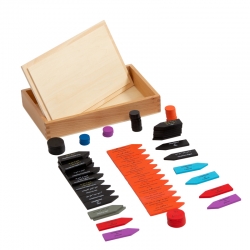
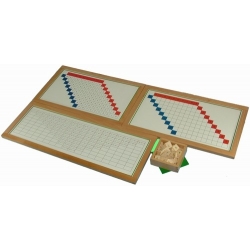
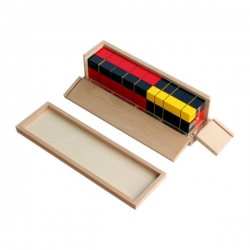
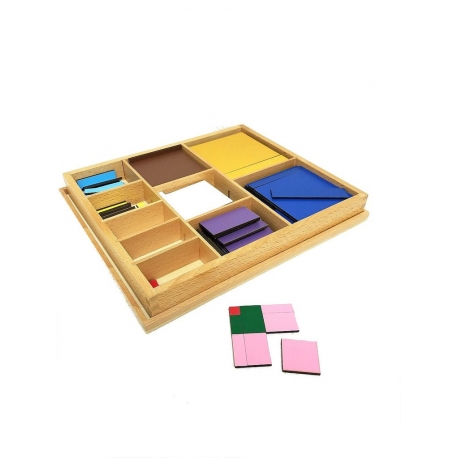
Sensorial Multiplication Board (Pythagoras Board) in plastic.
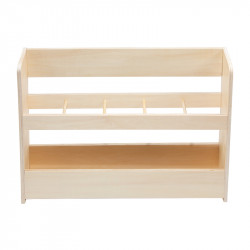
Wooden box with ten compartments, 32 cm / 26 / 5.5 cm.
Sensorial Multiplication Board (Pythagoras Board)
MATERIAL DESCRIPTION:
A box of ten compartments
- the first compartment contains:
one red square with 1 cm sides
- the second compartment contains:
one green square with 2 cm sides
two rectangles of 1 cm by 2
- the third compartment contains:
one pink square with 3 cm sides
two rectangles of 1 cm by 3 and two rectangles of 2 cm by 3
- the fourth compartment contains:
one yellow square with 4 cm sides
two rectangles of 1 cm by 4, two rectangles of 2 cm by 4, two rectangles of 3 cm by 4
- the fifth compartment contains:
one light blue square with 5 cm sides
two rectangles of 1 cm by 5, two rectangles of 2 cm by 5, two rectangles of 3 cm by 5,
two rectangles of 4 cm by 5
- the sixth compartment contains:
one purple square with 6 cm sides
two rectangles of 1 cm by 6, two rectangles of 2 cm by 6, two rectangles of 3 cm by 6,
two rectangles of 4 cm by 6, two rectangles of 5 cm by 6
- the seventh compartment contains:
one white square with 7 cm sides
two rectangles of 1 cm by 7, two rectangles of 2 cm by 7, two rectangles of 3 cm by 7,
two rectangles of 4 cm by 7, two rectangles of 5 cm by 7, two rectangles of 6 cm by 7
- the eighth compartment contains:
one brown square with 8 cm sides
two rectangles of 1 cm by 8, two rectangles of 2 cm by 8, two rectangles of 3 cm by 8,
two rectangles of 4 cm by 8, two rectangles of 5 cm by 8, two rectangles of 6 cm by 8,
two rectangles of 7 cm by 8
- the ninth compartment contains:
one dark blue square with 9 cm sides
two rectangles of 1 cm by 9, two rectangles of 2 cm by 9, two rectangles of 3 cm by 9
two rectangles of 4 cm by 9, two rectangles of 5 cm by 9, two rectangles of 5 cm by 9,
two rectangles of 6 cm by 9, two rectangles of 7 cm by 9, two rectangles of 8 cm by 9
- the tenth compartment contains:
one gold square with 10 cm sides
two rectangles of 1 cm by 10, two rectangles of 2 cm by 10, two rectangles of 3 cm by
10, two rectangles of 4 cm by 10, two rectangles of 5 cm by 10, two rectangles of 6 cm
by 10, two rectangles of 7 cm by 10, two rectangles of 8 cm by 10, two rectangles of 9
cm by 10.
AGE AT FIRST PRESENTATION: 4/5 years.
AIMS: DIRECT 2 visual discrimination of dimensions
INDIRECT 2 - building intelligence
- indirect preparation for geometry
- indirect preparation for calculating areas
- indirect preparation for addition and multiplication
- preparation for art
PRESENTATION:
- go with the child to the shelf
- sit down with them at a table
- open the box, place the lid under the box and ask the child whether they know what the activity
is called: "The Multiplication Board (Pythagoras Board)"
- take out all the squares, starting with the red one, the smallest, and place them on the table
- pick up the largest square, the gold one, and place it in front of the child, then take the next square
and stack it on the first one. Continue this way down to the smallest
- once all the squares are stacked, stand up yourself and invite the child to do the same
- look at the squares "from above"
- ask the child whether it reminds them of something: a pyramid.
In a second stage:
— put all the squares back in their place except the smallest, which you keep and place on the
table at your left end
- take the next square (green) and place it along the diagonal of the red
square
- place the two green rectangles on either side of the red square; for the following squares and
rectangles, ask the child to continue.
CONTROL OF ERROR:
GAMES:
1. Once the child can build the board very well, take out the square of 10 and ask them to
compose squares using two colours and then three colours with the different
shapes. You can suggest the same thing with the square of 9 or of 8.
2. Keep the square of 10 and, on top of it, lay the square of 9 with two strips of
1 cm and the square with a 1 cm side. The same can be done with the square of 6 or of 4.
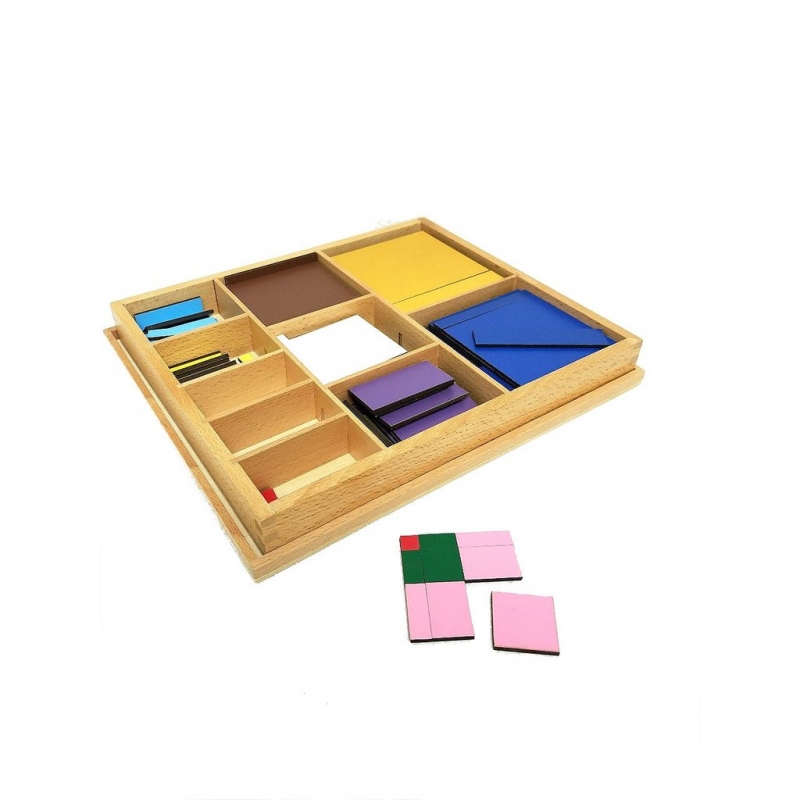
Sensorial Multiplication Board (Pythagoras Board) in plastic.
Wooden box with ten compartments, 32 cm / 26 / 5.5 cm.