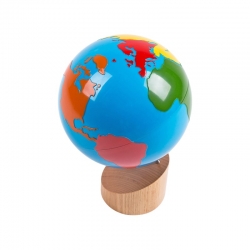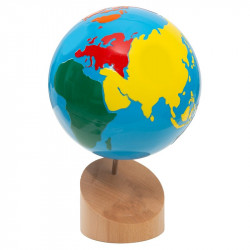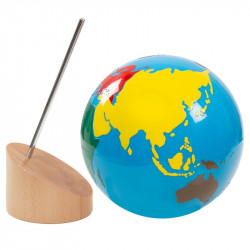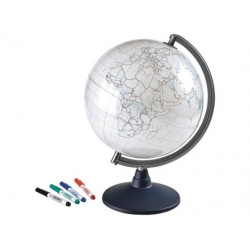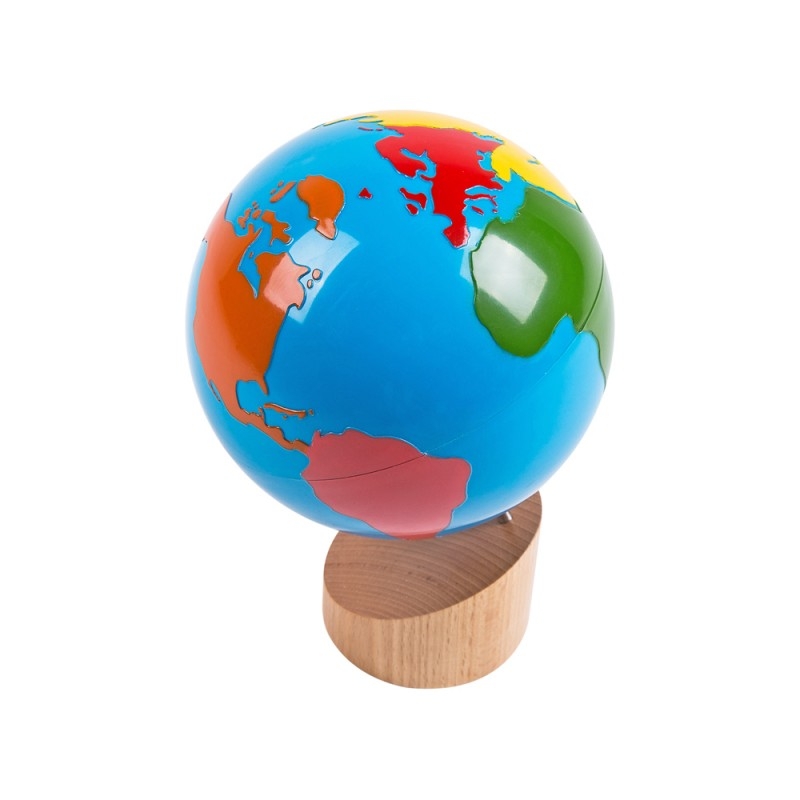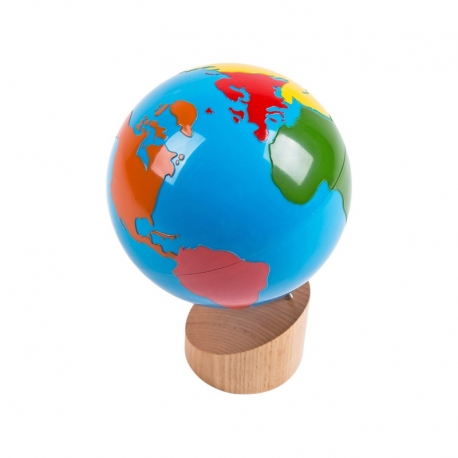
unroll a mat and go and fetch the two globes with the child
start a conversation with the child: ask him if he remembers the name of the smooth part (the sea), ask him if he has already been to the sea, ask him if he remembers the name of the rough parts (the land). Ask him if he has travelled
draw the child's attention to the other globe, ask him whether he finds that they look alike.
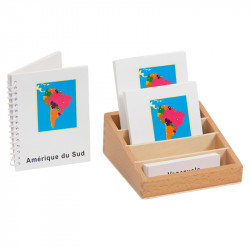
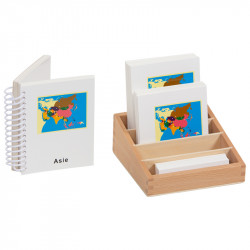
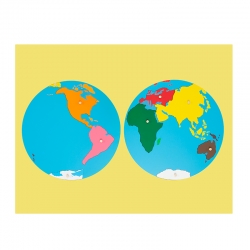
on the second globe there are colours and the coloured parts are called continents. Ask him if he knows where we are (in Europe); ask him if he knows the names of other continents, name them for him
invite the child to take the globe in turn and show us where the continents are and where the sea is: three-period lesson on "continents/sea"
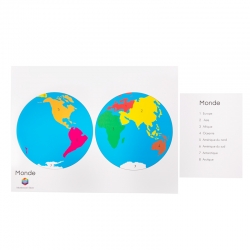
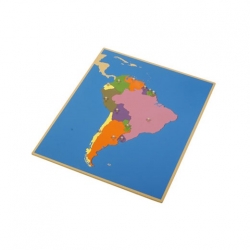
place the globe back on its stand and go and fetch the planisphere
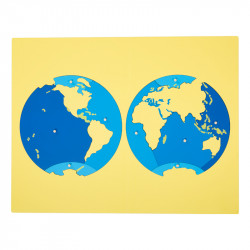
show the child the transition from the spherical representation to the "flat" representation, using a plastic ball cut in two. "You see, we cut the ball and flattened it, this is a planisphere."
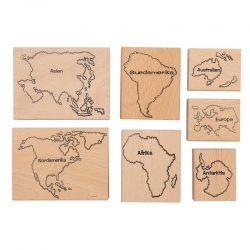
remove each continent and name it
invite the child to redo the puzzle
choose three continents, touch them and name them
do a three-period lesson on three continents
take a continent, touch the outline of the piece, name it and hand it to the child
do the same for the other two
"Can you show me Europe, Africa, Asia? Can you put Europe, Africa, Asia back in place?"
once the child has put the continents back in place, ask him to show where Europe, Africa, Asia are, then point to a continent and ask him: "Do you know what this is?"
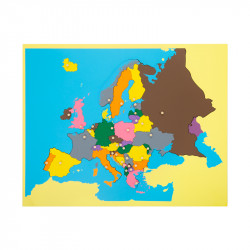
Another time, introduce three other continents to him.
The child can be invited to draw the outlines of the continents and to do pin-pricking, to practise doing the puzzle.