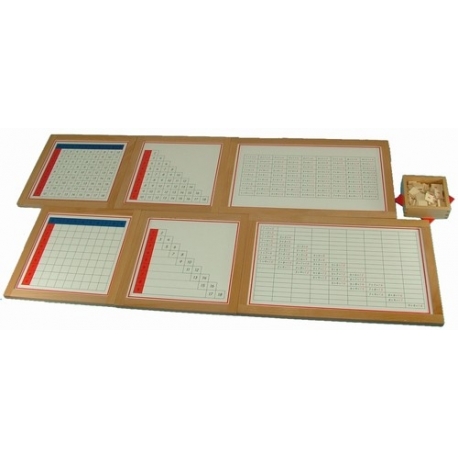
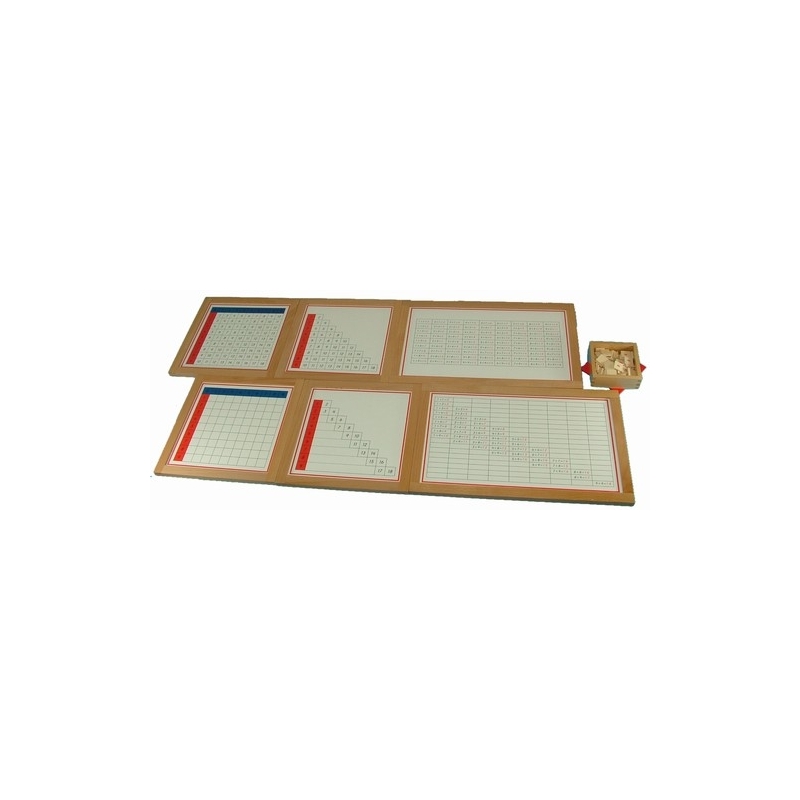
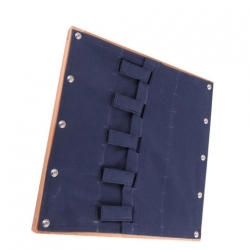
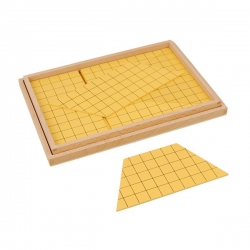
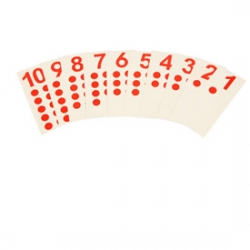
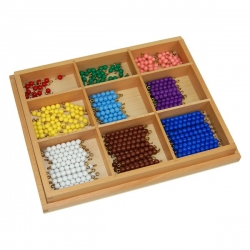
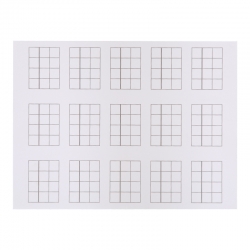
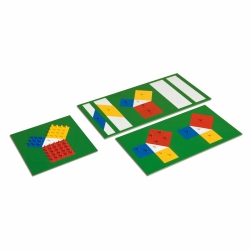
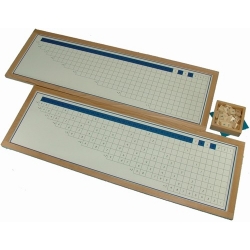
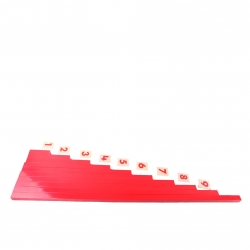
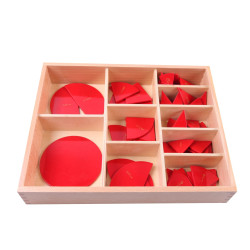
the board which takes the form of a square with the complete set of results
1 tray holding a basket with all the combinations, paper and a pencil
the control board
THE SECOND MEMORISATION BOARD:
the board from which the repeated results have been removed (1+9 = 9+1)
1 tray with a basket holding the combinations, paper and a pencil
THE THIRD MEMORISATION BOARD:
the board which takes the form of the second board but with fewer results
1 tray with paper and a pencil
THE FOURTH MEMORISATION BOARD:
the board, the same as the first but containing no results
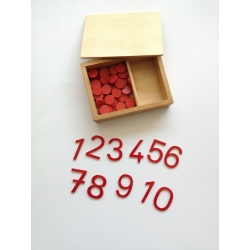
1 tray holding a basket with the combinations and a red box with the “plus” sign written on it in black, holding white wooden tokens on which the results of the combinations are written in red
PRESENTATION:
1. THE FIRST MEMORISATION BOARD:
settle at a table with the child. Tell the child the name of the activity: “This is the first memorisation board”
invite the child to draw a combination from the basket
once drawn, ask the child to write it: 1+9= then read the result on the board at the intersection of the 1 on the y-axis and the 9 on the x-axis
write the result on the paper
continue in this way with all the combinations
each time the child writes the combination, reads the result on the board, then writes it.
to check the result, offer the child the control board
2. THE SECOND MEMORISATION BOARD:
Present it to the child once they have seen all the combinations of the first board.
settle with the child at a table and ask them to draw a combination from the basket. -invite them to write it on the sheet, then show how to find the result on the board: for example 7+8
start from the smallest number, here seven, and go down until you reach the larger one; at the intersection of the two you get the result
write it on the sheet, then continue drawing other combinations.
3. THE THIRD MEMORISATION BOARD:
settle with the child at a table and invite them to draw a combination from the basket, write it on the sheet, then show the child how to find the result on the board. For example: 6+3.
go to the end of the six, then to the end of the three, and shift by the same number of squares to the left and right. If, for example, I move up one square with the right hand, I move down one square with the left hand.
once the result is found, write it on the sheet.
invite the child to draw another combination and to look for the result on the board.
suggest checking the result on the control board (no. 2).
4. THE FOURTH BOARD:
This is the only board for which we do not need paper and pencil.
fetch the material with the child
settle at a table with them
open the box of answer tokens and set them up: stack them by family and in ascending order. There is one 2, two 3s, three 4s, four 5s, five 6s, six 7s, seven 8s, eight 9s, nine 10s, eight 11s, seven 12s, six 13s, five 14s, four 15s, three 16s, two 17s, one 18
invite the child to draw a combination and to place the result on the board.
At this stage the child knows the tables. Draw all the combinations to place all the answer tokens.