keyboard_arrow_left
keyboard_arrow_right

AIMS:
DIRECT:
- visual discrimination of dimensions
INDIRECT:
- refinement of voluntary movement
- physical preparation for writing through gripping the knob of a cylinder
- hand-eye coordination
- indirect preparation for mathematics, in particular the decimal system and the variation of volumes
- development of the child's judgement
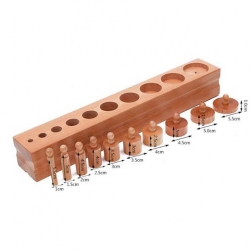
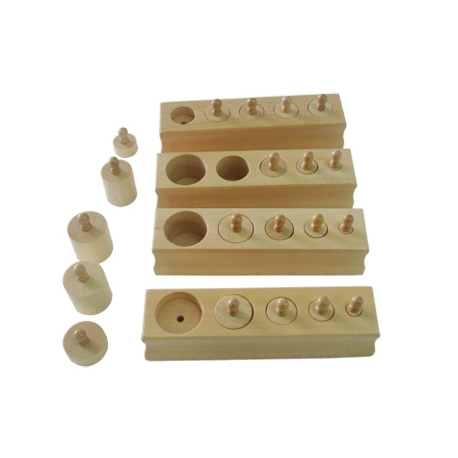
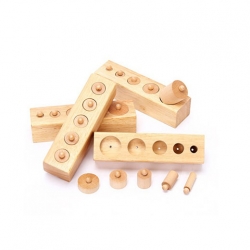
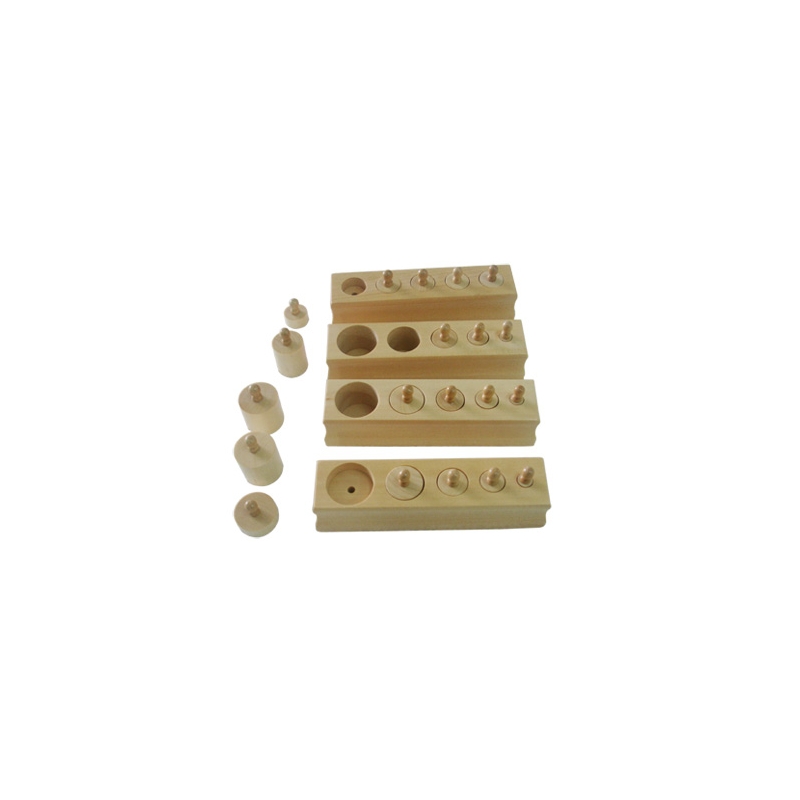
4 blocks of cylinders in natural wood. All four are equal in shape and dimensions (15 cm long, 4 cm high, 3.5 cm wide). Each holds five fitted cylinders.
The first block: the cylinders vary in two dimensions (variation of diameter)
The second block: the cylinders vary in three dimensions (variation of diameter and height)
The third block: the cylinders vary in three dimensions in the opposite direction;
The fourth block: the cylinders vary in one dimension: the height.
- fetch the cylinder block from the shelf with the child, placing one hand at each end
- sit at a table with the child, placing them on our left
- bring the block close to us
- take out each cylinder one by one using the three fingers: thumb, index and middle finger
- slowly lift the cylinder, holding it vertically above its cavity; start by removing the cylinders at the ends of the block, either the largest or the thinnest, and take out one after another the thickest and the thinnest, placing each cylinder slowly on the table behind the block and out of order
- once all the cylinders are on the table, take one -starting with the ends-, bring it above a cavity of the block while turning it over, then visually assess the perimeter of the cylinder and the perimeter of the cavity
- once we have judged the two perimeters to be equivalent, insert the cylinder into the cavity very slowly. Proceed the same way for each cylinder
- once all the cylinders are back in place, invite the child to do the activity in turn
AIMS:
DIRECT:
- visual discrimination of dimensions
INDIRECT:
- refinement of voluntary movement
- physical preparation for writing through gripping the knob of a cylinder
- hand-eye coordination
- indirect preparation for mathematics, in particular the decimal system and the variation of volumes
- development of the child's judgement