
Gustatory Sense
The Sense of Taste: The Flavorful World of Oral Discoveries
At Montessori Store, we honor taste as a sense that is both primal and refined, a gateway to culture, health, and mindful pleasure. Our collection of Montessori taste materials guides the child through an educational exploration in which every flavor becomes a territory to map, every texture an experience to savor, and every discovery a step toward dietary independence.
Taste: The First Nutritional and Cultural Educator
Maria Montessori saw in the sense of taste far more than a biological function: a tool for health education, a bridge between cultures, and a path toward independence. Our materials transform the act of eating into an act of learning, and tasting into an exercise in awareness.
The 4 Pillars of Montessori Taste Development
1. Discrimination of the fundamental tastes
- Sweet, salty, sour, bitter, umami
- Recognition and differentiation
- Pairing flavor with food
2. Perception of textures
- Crunchy, melt-in-the-mouth, creamy, grainy
- Educating the act of chewing
- Appreciating different consistencies
3. Food culture
- Flavors and seasons
- Flavors and local terroirs
- Flavors and culinary traditions
4. Independence and informed choices
- Developing preferences
- Learning to make healthy choices
- Awareness of nutritional needs
Our Selection of Montessori Taste Materials
For flavor discrimination
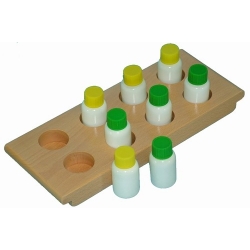
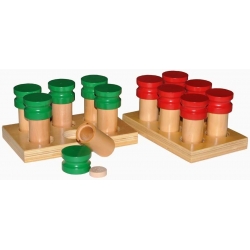
- Fundamental flavors set: neutral solutions for the 5 basic tastes
- Tasting cards: foods representative of each flavor
- Taste pairs game: matching identical flavors while blindfolded
- Flavor pyramid: different intensities of a single flavor
For exploring textures
- Texture tray: 6 to 8 foods with varied consistencies
- Classification game: crunchy/soft, smooth/grainy
- Blind tasting: identification by texture alone
- Evolution of textures: the same food in different forms (apple: raw, cooked, as compote)
Combined taste-and-smell materials
- Tasting with the nose pinched/open: understanding the interaction between taste and smell
- Aromatic herb set: fresh herbs to smell and then taste
- Discovery infusions: recognizing plants by their flavors
For food and cultural education
- Calendar of seasonal flavors: fruits and vegetables in season
- A flavor tour of the world: spices and specialties by continent
- Simple preparation workshop: citrus juicer, child-safe carrot grater
- Child-adapted table service: miniature pitcher, ergonomic cutlery
The Benefits of Montessori Taste Materials
Food awareness: knowing what we eat and why
Cultural openness: discovering the flavors of the world
Early independence: making informed food choices
A rich sensory vocabulary: learning to describe what we taste
A healthy relationship with food: pleasure without excess, discovery without fear
Technical Features of Our Materials
Food quality and safety:
- Organic or premium-quality products
- Certified food-grade containers
- Optimal hygiene for tasting activities
- No major allergens in the basic sets
A respectful educational approach:
- No forcing of food
- Gradual, willing discovery
- Respect for preferences and dislikes
- A positive education of taste
A well-suited progression:
- Familiar flavors, then new ones
- Simple textures, then complex ones
- Separate foods, then mixed ones
- Pure tasting, then within a culinary context
Usage Guide by Age
18-36 months: Offer mild flavors and familiar textures
3-4 years: Introduce contrasting flavors (sweet/salty)
4-5 years: Offer complex flavors and recognition games
5-6 years: Explore cultural associations and simple preparations
Expert tip: "Always provide a glass of plain water to rinse the palate between two tastings. Teach the child to chew slowly and to set down their cutlery between bites in order to fully develop their perception of taste."
Turn every meal into an educational sensory adventure.
Explore our unique collection of Montessori taste materials and nurture in your child an informed, curious, and joyful relationship with food.
To taste is to learn about yourself and about the world.