Cookie consent management
Montessori materials

Psychomotor Skills

Montessori Psychomotor Skills: When Movement Builds Intelligence

At Montessori Store, we honour the sacred bond between body and mind. In Montessori education, psychomotor development is far more than a physical skill; it is the channel through which the child organises their thinking, shapes their personality and connects with the world. Our collection is designed so that every gesture becomes a lesson, every moment of balance a discovery, and every act of coordination an inner achievement.

Movement: The Child's First Language

Maria Montessori taught that “movement is the last stage of thought.” Before conceptualising, the child acts. Our psychomotor materials turn this action into structured learning, where the hand educates the brain, and the whole body becomes the instrument of knowledge.

The 4 Fundamental Pillars of Montessori Psychomotor Development

1. Gross motor skills: Grounding in space

  • Developing balance and laterality
  • Coordinating large movements
  • Awareness of the body schema

2. Fine motor skills: Intelligence at the fingertips

  • Refining the pincer grip
  • Indirect preparation for writing
  • Voluntary control of movement

3. Hand-eye coordination: The unity of perception and action

  • Synchronising gaze and movement
  • Precision and real-time adjustment
  • The foundation of all academic learning

4. Motor planning: Thought in action

  • Anticipating and sequencing movements
  • Adapting to spatial constraints
  • Creativity in movement

Our Selection of Montessori Psychomotor Materials

For gross motor skills and balance

  • Progressive balance boards: from simple rocking to complex courses
  • Floor lines: ellipses, spirals and labyrinths for mindful walking
  • Rhythm ladders: foot/hand coordination with musical sequences
  • Tunnels and modular structures: spatial exploration and body awareness

For fine motor skills and precision

  • Complete dressing frames: 10 progressive frames (buttons, laces, fasteners and more)
  • Practical life trays: pouring, transferring and pinching with a variety of tools
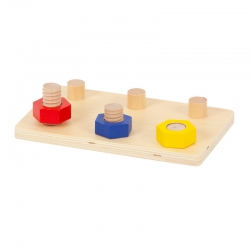
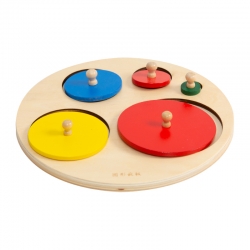
  • Grasping puzzles: adapted knobs to strengthen the hand
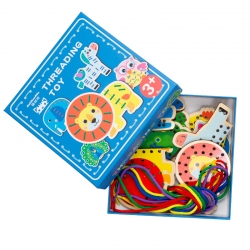
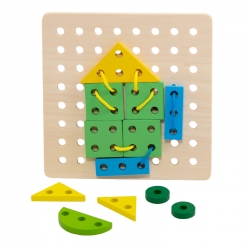
  • Threading and lacing activities: preparation for holding a pencil

For coordination and sensorimotor integration

  • Ball games and beanbags: throwing, catching and aiming in graded steps
  • Motor skills circuit: crawling, jumping and rolling in a logical sequence
  • Light sand table: free tracing and control of movement
  • Simple musical instruments: maracas, tambourine and xylophone for rhythm

Specialised materials for therapy and inclusion

  • Sensory cushions: varied textures and firmness for proprioception
  • Adapted vestibular equipment: gentle swings and balance boards
  • Handwriting therapy tools: ergonomic pencils and posture guides
  • Oro-facial motor games: to prepare for language

The Benefits of the Montessori Psychomotor Approach

Body-mind unity: movement becomes the foundation of thought
Kinaesthetic self-confidence: “I can” is embodied in the gesture
Prevention of learning difficulties: solid neural foundations
Genuine independence: mastery of one's body, mastery of one's life
The joy of free movement: physical activity as natural self-expression

Technical Features of Our Materials

Safety and adaptability:

  • Strict European standards (EN71)
  • Weight and sizes suited to each age
  • Natural and hypoallergenic materials
  • Built-in progression in every piece of equipment

Educational quality:

  • Consistent with the principles of psychomotor development
  • Isolation of one skill at a time
  • Self-assessment through bodily sensation
  • A constant link with other areas of learning

Inclusive design:

  • Accessible to children with special needs
  • Soothing colours that encourage concentration
  • Aesthetics that invite movement
  • Modularity to adapt to any space

Step-by-Step Guidance Guide

0-18 months: Free movement, sensory exploration, rolling over
18-36 months: Confident walking, first moments of balance, fine grasping
3-6 years: Complex coordination, motor sequences, gestural control
6-12 years: Specialised motor skills, adapted sports, artistic body expression

Expert tip: “Do not correct the movement, observe it. The child finds their own balance and coordination. Your role is to prepare a safe and stimulating environment, then to trust the intelligence of the body.”


Give your child the space to grow through movement and awareness.
Explore our unique collection of Montessori psychomotor materials and support the harmonious development of their whole being.

Movement is life. Maria Montessori